WT-DTC-logo-crop

Daan Theeuwes Center: Data-driven neurorehabilitation with QuestManager

  • Organization: Daan Theeuwes Center
  • Healthcare sector: neurorehabilitation
  • Implemented solution: QuestManager
2019.187637

About the Daan Theeuwes Center (DTC).

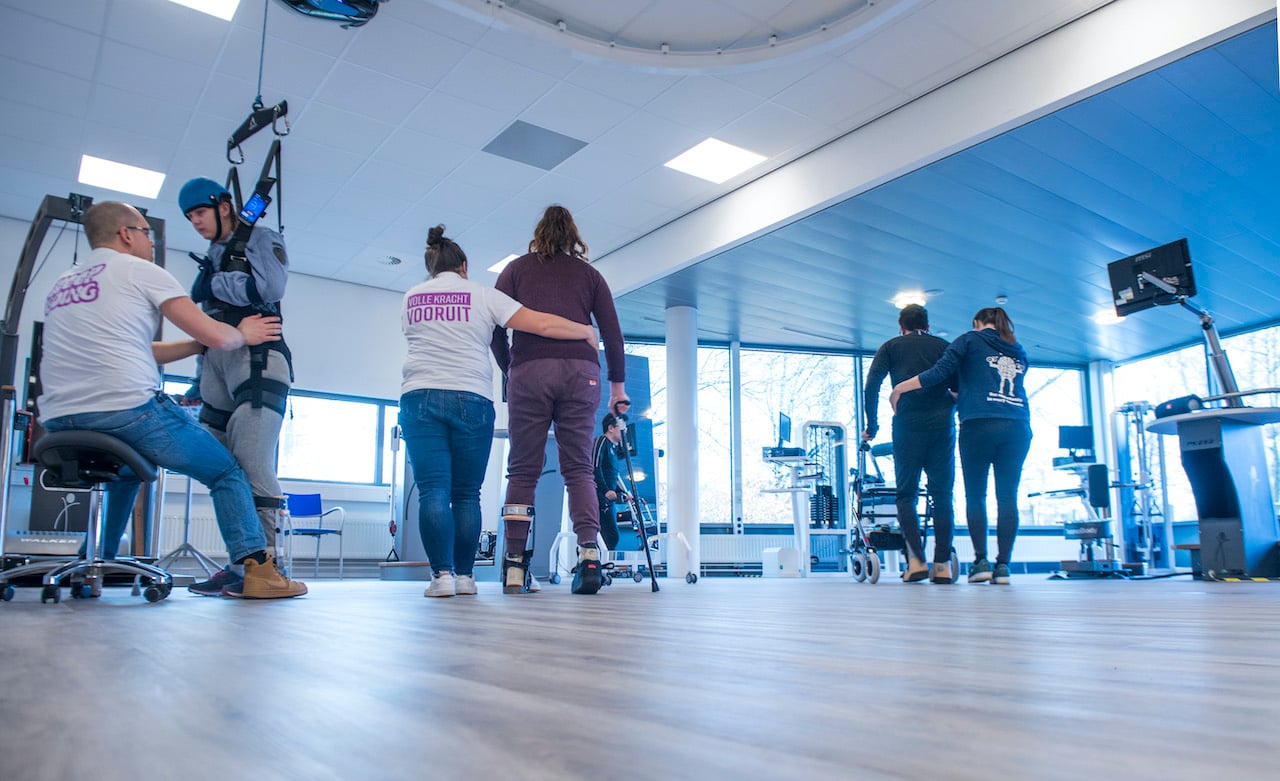
The Daan Theeuwes Center (DTC) is a specialized rehabilitation center that focuses on young people between the ages of 16 and 35 who are dealing with severe non-congenital brain injury (NAH). This injury can result from a traffic accident, a fall, or a brain hemorrhage, for example. The DTC offers an intensive treatment program designed to help these young people reach their maximum potential and improve their quality of life.

The DTC's treatment program is highly intensive and multidisciplinary in nature. This means that a team of diverse health care providers, including physical therapists, occupational therapists, speech therapists, psychologists and physicians, work closely together to develop and implement a customized treatment plan for each rehabber. This holistic approach ensures that all aspects of the recovery process are addressed, from physical rehabilitation to cognitive and emotional support.

Measurement Feedback System (MFS) at the Daan Theeuwes Center

The DTC has developed an innovative system for monitoring the progress of its rehabilitation patients' recovery process. This system, known as the Measurement Feedback System (MFS, or measurement lane in the corridor), uses structured, clinical measurements that are recorded in QuestManager. The results of these measurements are visually displayed for each rehabilitant via dashboards in QuestManager, which are immediately accessible for application in care for treatment teams. These dashboards provide a clear and up-to-date overview of each rehabilitant's diagnostics and progress.

The clinical measurements are not only used for direct patient care, but also stored in a database. This data is a valuable source for care evaluation and scientific research, with the goal of continuously improving neurorehabilitation. This systematic approach allows the DTC to evaluate and optimize the effectiveness of treatments.

Health Intelligence Program (HIP).

In addition to the benefits of the MFS for detailed multidisciplinary diagnostics and progress monitoring, the DTC also leverages clinical information for the Health Intelligence Program (HIP). This program focuses on care evaluation, precision medicine and developing decision support for the treatment team.

Within the HIP, data from the MFS is discussed periodically during evaluation sessions with various discipline groups and management. The goal of these sessions is to identify strengths and weaknesses in treatment. These insights lead to care innovations and contribute to a continuous cycle of improvements in care.

The DTC's scientific research within the HIP focuses on developing prediction models that contribute to the transition to precision medicine. Here, the focus is shifting from research on characteristics of diagnostic groups within rehabilitation medicine to a more individualized approach. The goal is that care can be increasingly tailored to a rehabilitant's characteristics.

Thanks to the Measurement Feedback System, we have a clear, current and complete picture of progress for each rehabber. It helps us make each treatment decision more informed.
Daan Theeuwes Center (DTC)

Implementation of the Measurement Feedback System (MFS) at the Daan Theeuwes Center (DTC)

The success of the Measurement Feedback System (MFS) at the DTC is largely due to its careful implementation and the active involvement of healthcare providers. The following is an overview of the main steps in the implementation process:

  1. Preparation Phase: In this phase, support was created among all stakeholders and a project group was formed. This provided a solid foundation and a shared vision for the project.

  2. Design phase: During this phase, the measurement trajectories were designed. The project group engaged in discussions with healthcare providers to determine which measurement tools would be valuable in the treatment of their patients. These instruments were reviewed against national and international guidelines and assessed for quality.

  3. Construction phase: Next, the measurement tools and measurement pathways were integrated into the system, adapted to the specific situation and needs of the DTC. During this phase, practitioners provided continuous feedback to ensure that the system functioned optimally.

  4. Going Live: After approval by all stakeholders, the MFS was put into use. This marked an important milestone in the project.

  5. Monitoring and Evaluation: The use of the MFS is continuously monitored. Periodically, both completed and missed measurements are reviewed. Clinicians receive an overview of the missed measurements so that they can still be completed. The MFS is also evaluated annually per professional group during the evaluation meetings.

Thanks to the involvement of the caregivers throughout the implementation process and the transparent reporting by the DTC, the response rate of the completed measurements is high: 87% of the distributed measurements are completed. This high rate contributes to the effectiveness and reliability of the MFS, which ultimately benefits the quality of care for the rehabilitants.

The Treatment Pathway at the DTC

Within the treatment pathway at the DTC, rehabilitants' functioning is measured every six weeks. Currently, there are more than 70 different clinical measurements, divided into seven measurement pathways, specifically tailored to the DTC's practice. These measurements are carefully completed and visualized via dashboards, which are accessible to the caregivers involved. This ensures that the treatment team always has the most current and relevant information for making important decisions.

This approach not only benefits current treatment but also contributes to the DTC's ongoing data collection. The data collected is analyzed to understand the population under treatment at the rehabilitation center. This is very valuable because the representativeness of scientific literature is very limited for the specific target population of the DTC. Thanks to the center's own data collection and scientific research, the outcomes can be used to further improve future treatments.

More information can be found on the Daan Theeuwes Center website:Measurement Feedback System - Daan Theeuwes Center.

Future vision of the Daan Theeuwes Center (DTC)

The DTC aims to work more closely with other rehabilitation centers in the future. By comparing dashboards and data, they hope to gain even more insight into the course of treatments within the rehabilitation sector. This collaboration would not only improve the quality of care, but also provide valuable data for further analysis and research. In addition, the DTC focuses on optimizing data collection and gaining insight into its outcomes. The findings from these data are of great importance to the entire rehabilitation sector. They provide valuable information on both the implementation of structured measurements and the results of scientific research. By sharing these insights, the sector as a whole can benefit and treatments can be further improved.

In summary:
1. What is QuestManager and how is it used within the Daan Theeuwes Center (DTC)?
QuestManager is used to monitor the progress of rehabilitation pathways through structured, clinical measurements. The outcomes of these measurements are visualized through dashboards that are visible to the treatment teams.

2. What benefits does QuestManager provide to caregivers and rehabilitators?
QuestManager helps caregivers make important decisions by giving them access to detailed information about the progress of the rehabilitants. This benefits current treatment and data collection for future treatments.

3. What are the success factors of implementing QuestManager?
Success factors include the involvement of staff from Lighthouse and caregivers during the implementation process, creating support, and continuous monitoring and periodic evaluation of QuestManager use.

QuestManager has several key features that make it a valuable tool within the DTC:

1. Progress monitoring: QuestManager is used to monitor the progress of rehabilitation pathways through structured, clinical measurements. These measurements are stored in a database and used for care evaluation and scientific research.

2. Dashboards: The outcomes of the clinical measurements are visualized through dashboards. These dashboards are available to treatment teams, giving them optimal information for important decisions.

3. Data analysis: The data collected is used for analyses that help improve current treatments and develop future treatments. This is especially useful because existing scientific literature often does not match the DTC's specific target population.

4. Vision for the future: The DTC wants to collaborate with other rehabilitation centers to compare dashboards and gain more insight into the course of treatments within the rehabilitation sector. This is relevant to both the implementation of structured measurement and the outcomes of scientific research.

Our impact in figures

Experience 15+ year
Launched in 2013 in partnership with Mayo Clinic
Library with +650 validated questionnaires
More than +150K Questionnaires sent out monthly
More than +2M Caregivers
Satisfied healthcare institutions +100 Worldwide
TRUSTED BY LEADING ORGANIZATIONS

500+ healthcare professionals improve patient care daily
From mental health institutions to hospitals and research institutes, organizations rely on Questmanager for safe, effective, and validated questionnaire solutions.